Author: Tom Rozee, Founder
Author Bio: Tom Rozee has run paid media since 2016. He has helped ecommerce brands generate more than $500M in client revenue and managed over $100M in ad spend.
Introduction
Fashion ecommerce moves quickly. Trends change. Customers compare more brands. New products arrive every week. Paid media costs can shift without warning. That makes growth harder than simply running more ads.
A fashion brand needs a clear offer. It needs strong creativity. It needs product pages that make buying easy. It also needs a plan for new customers, repeat orders, and healthy margins. A fashion marketing agency should bring all those parts together.
The right partner should understand how fashion buyers find products, compare styles, respond to creativity, and decide when to buy. It should also know when an ad account is not the real problem. This guide explains how fashion ecommerce marketing works. It covers paid social, Google Ads, creative testing, offers, conversion, retention, and measurement.
You will also learn what to look for in an agency. You will see how in-house and agency teams compare. You will learn when outside support can make sense. The goal is simple. You should know what good fashion marketing looks like before you spend more money on growth.
What Does a Fashion Marketing Agency Do?
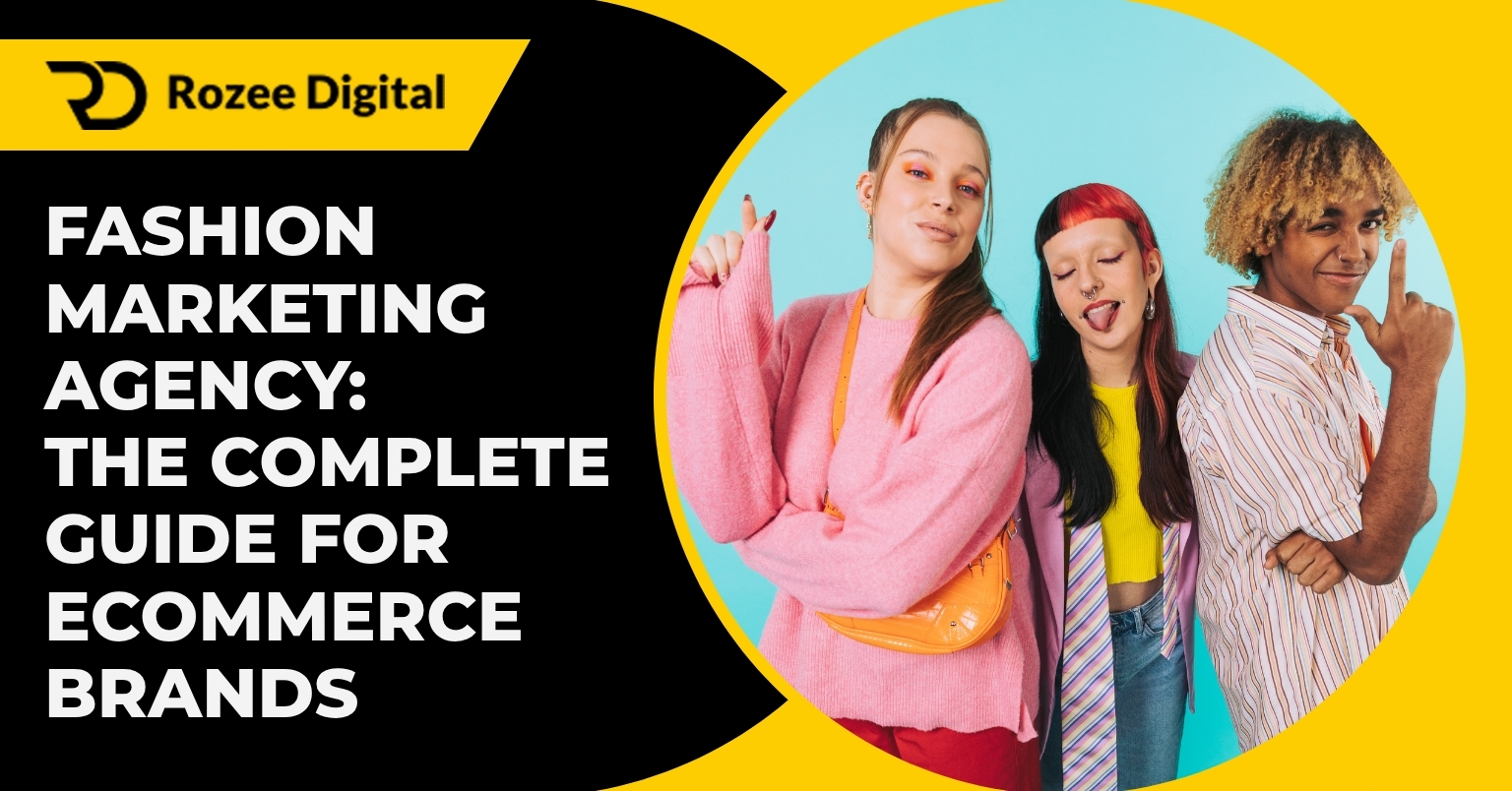
A fashion marketing agency helps apparel and fashion brands attract customers and turn attention into sales.
Its work can cover strategy, paid media, creative, landing pages, email, reporting, and customer acquisition.
Common services include:
- Meta advertising
- Google Ads
- Shopping campaigns
- TikTok advertising
- Pinterest advertising
- Creative testing
- Product launch campaigns
- Offer testing
- Landing page reviews
- Conversion analysis
- Email marketing
- Customer retention
- Performance reporting
The key is not the service list. The key is how these services work together. A weak plan may focus on clicks and platform metrics. A stronger plan asks whether those clicks create profitable customers.
That means looking at new customer CAC, contribution margin, average order value, lifetime value, and repeat purchase rate. Fashion brands also need to account for stock. A campaign may perform well, but the product may sell out. That changes the next decision.
Growth must fit the whole business, which is why partnering with a specialised fashion advertising agency UK team is essential to keep your marketing aligned with real-time inventory and margins.
Why Fashion Ecommerce Needs a Full-Funnel Strategy
Fashion customers do not always buy after one ad. They may see a product on Instagram. Then they visit the site. Later, they search for the brand on Google. They may compare sizes, colours, reviews, and prices.
They may leave. Then they may return after seeing another ad.
The journey can look like this:
Attention → Interest → Product View → Consideration → Purchase → Repeat Purchase
Each stage affects the next.
A strong ad cannot fix a weak product page. A good product cannot fix a poor offer. More traffic cannot solve weak customer retention.
That is why a fashion ecommerce agency should look beyond media buying.
Why ROAS Alone Can Mislead Fashion Brands
ROAS shows revenue against ad spend. It is useful, but it does not tell the full story. Imagine a fashion brand reports a 4x ROAS. Most orders come from existing customers.
Now imagine another campaign reports a 3x ROAS. Most buyers are new. Many return for another purchase. The second campaign may create more long-term value.
Your team should also review:
- New customer CAC
- Contribution margin
- Average order value
- Customer lifetime value
- Payback period
- Repeat purchase rate
- New customer revenue share
The right target comes from your business model.
What Channels Matter for Fashion Brands?
Fashion brands can use several paid channels. Each one can play a different role.
| Channel | Best Use | Main Role |
| Meta | Visual discovery | Prospecting and retargeting |
| Product discovery | Fashion and lifestyle content | |
| Active demand | Search and Shopping | |
| TikTok | Trend-led discovery | Creator content |
| Style planning | Visual inspiration | |
| Customer retention | Repeat purchases |
Do not use every channel because competitors do. Choose channels based on product fit, audience, creative supply, buying cycle, and margins.
Meta Advertising
Meta can help fashion brands reach people before they search for a product. Creative plays a major role.
A brand might test:
- Outfit videos
- Product close-ups
- Creator reviews
- Customer content
- Styling tips
- Founder stories
- New collection launches
- Price-led offers
- Product comparisons
The goal is not to make every ad look different. The goal is to test different reasons a customer may want the product.
Google Ads & Google Shopping
Google captures existing demand.
Search ads can target people looking for products, categories, or specific brands.
Shopping campaigns can show products, prices, images, and store details.
This can work well when buyers already know what they want. But paid search still needs a good offer and product page. High-intent traffic does not guarantee a sale.
TikTok Marketing
TikTok can work well for fashion brands with strong visual content. Creator-led videos can show how products look, fit, move, or work in real life.
Useful tests include:
- Outfit transitions
- Creator reviews
- Try-on videos
- Styling ideas
- Customer reactions
- Product demonstrations
The content should fit the platform and audience.
Pinterest Discovery
Pinterest can support fashion discovery and planning. People may use the platform to save outfits, style ideas, event looks, seasonal clothing, and gift ideas.
That makes visual assets important. A fashion brand should show the product clearly. It should also give shoppers a reason to save, click, and return.
How to Build a Fashion Marketing Strategy
A strong plan starts with the brand and customer. The ad account comes later.
1. Start With the Offer
Ask:
Why should someone buy this product now?
Review:
- Price
- Product value
- Bundles
- Discounts
- Shipping
- Returns
- Guarantees
- Social proof
Fashion buyers may care about fit, quality, style, comfort, delivery, and returns. Your offer should reduce doubt.
2. Define the Customer
Know who you want to reach.
Ask:
- What style do they want?
- What problem does the product solve?
- What makes them hesitate?
- What brands do they compare?
- What proof do they need?
- What makes your product different?
These answers should shape your creativity.
3. Build Multiple Creative Angles
One product can have several selling points.
A jacket may be positioned around warmth, style, fit, fabric, or versatility.
A dress may be positioned around occasion, comfort, cut, color, or ease.
Each angle creates a useful test. Do not repeat one message across every ad.
4. Match Creative to Buyer Stage
Cold shoppers may need a reason to care.
Warm shoppers may need proof.
Hot shoppers may need a reason to buy now.
A simple framework is:
Cold: Problem → Product → Benefit
Warm: Proof → Objection → Offer
Hot: Product → Reason to Buy → Action
This keeps your message clear.
5. Match Ads With Product Pages
The ad makes a promise.
The product page should keep it.
If an ad shows a specific dress, send shoppers to that dress.
If the ad focuses on fit, show size guidance and useful fit details.
If the ad promotes a collection, make the collection easy to browse.
Do not make customers search for what they already clicked to see.
What Makes Fashion Creative Work?
Fashion is visual. That gives brands many ways to create useful content. But visual quality alone does not make an ad effective. The creative must make the product clear and give the shopper a reason to care.
Test the Hook
The opening seconds matter in the video.
Try hooks such as:
- “The jacket you can wear three ways.”
- “Need an outfit for next weekend?”
- “Why do customers keep choosing this fit?”
- “One dress. Three easy looks.”
The hook should attract the right shopper.
Test Product Proof
Proof can include:
- Customer reviews
- Creator content
- Try-on clips
- Fit details
- Product demonstrations
- Ratings
- User-generated content
- Customer photos
Proof can reduce buying doubt.
Test the Offer
Fashion brands can test:
- Bundles
- Free shipping
- First-order offers
- Seasonal promotions
- Limited drops
- Gifts
- Multi-buy offers
Always watch the margin.
More orders do not always mean more profit.
Fashion Marketing Agency UK: What Should Local Brands Consider?
A fashion marketing agency UK brands choose should understand the market and customer. UK fashion brands may face different seasonality, shipping expectations, pricing, and customer behaviour.
That does not mean every campaign needs a UK-only approach. It means your team should understand where customers live and what affects their buying decision.
Consider:
- UK pricing
- Shipping costs
- Returns
- VAT
- Seasonal demand
- Product availability
- Local customer language
- UK competitors
A global brand may need different creatives for different markets.
A local brand may need a tighter regional plan.
The strategy should match the actual customer base.
What Should a Fashion Brand Test?
Testing should answer a clear question. Do not change several major variables at once.
Test Offers
Try different purchase reasons:
- Free shipping
- Bundles
- First-order discounts
- Limited drops
- Seasonal promotions
- Gifts
- Multi-item offers
Track margin alongside revenue.
Test Creative Angles
Test:
- Product benefits
- Styling
- Fit
- Quality
- Price
- Social proof
- Customer stories
- Seasonal use
You want to learn why people buy.
Test Landing Pages
Review:
- Headlines
- Product images
- Reviews
- Size guides
- Product details
- Shipping information
- Returns
- Calls to action
A fashion shopper may need more confidence before buying. Your page should answer those questions early.
How Should Fashion Brands Plan Ad Budgets?
The budget should follow demand and economics. Suppose a brand sells a $120 jacket. After product and fulfillment costs, it has $50 in contribution before advertising.
A $70 customer acquisition cost creates a first-order problem. The brand may still accept that cost if customers buy again. That makes customer lifetime value important.
Your team should know:
- Average order value
- Gross margin
- Contribution margin
- New customer CAC
- Customer lifetime value
- Payback period
- Repeat purchase rate
Do not use a random ROAS target. Build your target from your own economics.
Budget Should Follow Opportunity
Do not split spend equally across products.
Ask:
- Which products have strong margins?
- Which products convert well?
- Which products have enough stock?
- Which ads attract new buyers?
- Which audiences have room to grow?
- Which offers work best?
Then move spend toward the strongest opportunities.
What Does a Fashion Brand Ads Agency Need to Manage?
A strong fashion brand ads agency should look at more than campaigns. It should understand the full customer path.
Creative Performance
Which hooks work?
Which formats attract buyers?
Which products create demand?
Which creators produce useful content?
The answer should shape the next test.
Product Performance
Not every product deserves the same spend.
A brand may have 50 products, but only ten may have enough margin and demand for aggressive acquisition. The budget should reflect that.
Audience Quality
Do not judge audiences by cheap clicks. Review purchase behavior. Look at new customers and customer value.
Funnel Performance
Find where shoppers stop. High clicks with low product views may suggest a page issue.
Strong carts with weak purchases may suggest checkout, shipping, price, or trust problems. The data should help locate the weak step.
How Should Fashion Brands Measure Growth?
Start with platform metrics:
- CPM
- CTR
- CPC
- Conversion rate
- Cost per purchase
- ROAS
Then move to business metrics:
- New customer CAC
- Contribution margin
- Average order value
- Lifetime value
- Payback period
- Repeat purchase rate
- Revenue from new customers
Platform metrics show activity. Business metrics show value. You need both.
Why New Customer CAC Matters
Existing customers can make ad results look stronger. A campaign may receive purchases from people who already know your brand. That does not mean the campaign is bad.
It means you need to separate new and returning customers. This helps you understand true acquisition costs.
Fashion Ecommerce Agency vs. In-House Team
Both models can work. The right choice depends on your spend, team, creative needs, and growth stage.
| Factor | In-House | Agency |
| Specialist skills | Team dependent | Specialist access |
| Hiring | Internal recruitment | Already staffed |
| Creative testing | Internal resources | Shared experience |
| Channel depth | Depends on team | Wider exposure |
| Cost | Salaries and tools | Agency fee |
| Outside view | Limited | Built into the relationship |
An in-house team may work well when you have enough volume to support senior talent.
An agency can make sense when you need specialist skills without hiring several roles.
Neither model wins by default. Choose based on the work your brand needs.
What Should You Look for in a Fashion Marketing Agency?
Choosing a partner requires more than reviewing a service list.
Ecommerce Experience
Ask if the team understands:
- Product margins
- Seasonal demand
- Customer acquisition
- Average order value
- Repeat purchases
- Product catalogs
- Creative testing
Fashion has unique buying patterns. Your agency should understand them.
Senior Specialists
Ask who manages your account. Find out who makes the major decisions. You should know who owns the work after the sales call.
Creative Strategy
Ask how the agency tests new ideas. A media plan without creative planning is incomplete.
You need a system for testing hooks, angles, formats, creators, offers, and proof.
Clear Reporting
Good reports should explain:
- What happened
- Why it happened
- What changed
- What comes next
Reports should help you make decisions. They should not simply repeat platform metrics.
Full-Funnel Thinking
Your agency should be willing to question:
- The offer
- Creative
- Product pages
- Checkout
- Retention
- Customer value
If every problem gets blamed on the ad platform, ask more questions.
Performance Diagnostics: Real-World Fashion Scaling Mechanics
Raw metrics mean nothing in a vacuum. To see how full-funnel adjustments drive real business health, we must look at the data. These first-hand breakdowns show exactly how channel planning, creative execution, and unit economics interact under actual scaling conditions.
Case 01: Engineering Multi-Lever Scaling (Hampden Clothing)
The Challenge: Breaking past baseline performance ceilings without eroding multi-channel efficiency.
Many brands assume scaling requires increasing spending on a single winning platform. When building the growth system for luxury apparel brand Hampden Clothing, we coordinated Meta, Google, and Pinterest to diversify acquisition touchpoints simultaneously.
- The Verified Growth Data: Scaled top-line revenue from $2.3 million to $12 million while securing a sustained 10x ROAS. Total order volume increased by 121%.
- True scale is rarely driven by traffic volume alone. In this instance, the strategic lever was a 25% increase in Average Order Value (AOV). By pairing targeted prospecting with high-intent Search and Shopping captures, each acquired customer became structurally more valuable to the business economics.
Case 02: Managing the Operational Levers of Controlled Scale (Alp n Rock)
The Challenge: Maintaining bottom-line profitability during a high-velocity budget expansion phase.
For premium activewear brand Alp n Rock, the goal was to aggressively scale monthly revenue while explicitly protecting the contribution margin.
- The Verified Growth Data: Transitioned the brand from a $300,000 baseline to $1 million in monthly revenue, maintaining a steady 4x ROAS alongside a 119% jump in order volume and a 124% top-line revenue expansion.
- At smaller stages, the primary question is simply: “Can we buy customers at a profit?” At the $1M/month stage, the questions become operational: “Is our inventory velocity aligned with our ad spend? Can our retention flows sustain the influx of first-time buyers?” Scaling requires matching media buying with real-time stock availability.
Case 03: Restructuring Offers to Shift Unit Economics (Good For Nothing)
The Challenge: Countering high customer acquisition costs (CAC) through backend funnel optimization.
Streetwear brand Good For Nothing required an acquisition framework that could scale during highly competitive market cycles. Rather than trying to force cheaper clicks out of the ad platforms, the strategy focused on conversion rate optimization (CRO) and creative testing to modify front-end order values.
- The Verified Growth Data: Achieved a 250% increase in revenue alongside a 114% growth in total orders.
- This shift succeeded because Average Order Value rose by 27%. When you change the offer architecture, using bundling, multi-buy logic, and curated collection paths, you alter the maximum allowable CAC. The brand could afford to spend more to acquire a customer on paid social because the immediate checkout value was structurally protected.
Common Fashion Marketing Mistakes
These are some common fashion marketing mistakes:
Scaling Weak Creative
More spend cannot fix an ad people ignore.
Chasing Cheap Clicks
A low CPC does not guarantee profitable sales.
Ignoring Margin
Revenue without healthy contribution can create false growth.
Testing Too Little
Fashion customers respond to fresh products and fresh ideas.
One winning ad cannot last forever.
Ignoring Product Pages
Great ads can still fail when product pages create doubt.
Sending All Traffic to One Page
Different products and offers may need different landing experiences.
Ignoring New Customers
Returning buyers can make acquisition look cheaper than it is. Track new customers separately.
Reacting to One Bad Day
Daily data can move. Consider promotions, stock, seasonality, creative launches, and tracking changes before making major decisions.
How Does Fashion Marketing Fit Into Full-Funnel Growth?
A useful growth system looks like this:
Offer → Creative → Paid Media → Conversion → Retention
The offer gives people a reason to buy.
- Creative turns that reason into a clear message.
- Paid media brings the message to relevant shoppers.
- Conversion turns attention into orders.
- Retention turns first orders into repeat revenue.
This is why fashion marketing should not stop with ad management.
If the offer is weak, ads may struggle, If the product page is unclear, good traffic may fail and If retention is poor, first-order acquisition can look too expensive.
Each stage affects the next.
When Should a Fashion Brand Hire an Agency?
Outside support may make sense when:
- Your brand has proven demand.
- Paid spend is meaningful.
- Growth has slowed.
- Creative testing feels too slow.
- Your team lacks specialist skills.
- Your account has become hard to manage.
- You need clearer new customer data.
- You want to scale while protecting margin.
You may need more groundwork first if you are pre-launch.
You may also need more testing if product-market fit is unclear.
A good agency should tell you that honestly. The right time also depends on your internal team. If one person manages creative, paid media, email, analytics, and the website, some areas may not get enough attention.
Outside support can add specialist depth without forcing you to hire every role.
How Much Does Fashion Marketing Support Cost?
There is no single fee for every brand.
Cost can depend on:
- Monthly ad spend
- Number of channels
- Creative support
- Catalog size
- Account complexity
- Reporting needs
- Strategy scope
Ask what the fee includes. Some agencies focus on media buying.Others include creative strategy, landing page reviews, tracking, reporting, and retention. Compare the full service. Do not compare monthly fees alone.
A cheaper agency can become expensive if poor decisions waste media spend.
A higher fee can make sense when senior specialists improve decisions across the funnel.
Questions to Ask Before Hiring a Fashion Marketing Agency
Ask these questions before signing:
- Who will manage my account?
- How much fashion ecommerce experience does the team have?
- Which channels do you manage?
- How do you test creative?
- How do you measure new customer CAC?
- How do you review contribution margin?
- How do you decide when to scale?
- What does reporting include?
- What happens when performance falls?
- How do you identify problems outside the ad account?
Listen for clear answers.
You want to understand who owns the work.
You also want to know how the agency handles poor performance.
A good partner should explain both wins and problems.
Is a Fashion Marketing Agency Right for Your Brand?
An agency may fit when you have proven demand, meaningful spend, a clear offer, and a growth goal. It may not fit yet if you are still testing product-market fit.
Before hiring, review:
- Product-market fit
- Gross margin
- Customer acquisition target
- Conversion rate
- Tracking
- Creative supply
- Inventory
- Repeat purchase potential
These areas create the foundation for paid growth.
If the foundation is weak, more media spend may only make the weakness more expensive.
If the foundation is strong, outside specialists may help your team move faster.
Conclusion
A fashion marketing agency should do more than manage ads. It should help your brand connect the offer, creative, paid media, conversion, and retention into one growth system. Fashion brands have unique needs. Customers care about style, fit, quality, price, social proof, delivery, and returns. Seasonal demand can also change the buying cycle.
That means your marketing needs to stay close to the product and customer. Paid social can create demand. Google can capture existing intent. Pinterest can support visual planning. TikTok can bring products to life through creator content. Email can bring past customers back. But no channel works alone. The strongest fashion growth plans connect every stage.
Rozee Digital has worked with fashion and apparel brands across paid media channels. Its case studies include Hampden, Alp n Rock, Good For Nothing, Sans Matin, Cocopup, and other ecommerce brands. Before increasing spend, check your offer, creative supply, conversion path, margins, stock, and retention. Then choose a partner that can see the whole picture.
The right relationship should make decisions clearer. It should help your team learn from every test. It should connect marketing results with customer value. If your brand has demand, sound economics, and enough creative fuel, a fashion marketing agency can become a valuable part of your growth system.
Ready to Grow Your Fashion Brand?
Build a stronger growth system across paid media, creative, conversion, and retention. Book a free consultation with Rozee Digital to identify your biggest opportunities and create a clear path to profitable ecommerce growth.
Frequently Asked Questions
Q1: What does a fashion marketing agency do?
A fashion marketing agency helps fashion brands attract customers and grow sales. Services can include paid media, creative strategy, conversion work, email, reporting, and customer acquisition.
Q2: Is a fashion marketing agency worth it for ecommerce brands?
It can be. The strongest fit usually comes when a brand has proven demand, clear economics, enough creative supply, and a defined growth goal.
Q3: What channels work best for fashion marketing?
There is no single best channel. Meta, Google, TikTok, Pinterest, and email can each serve different roles based on the product, customer, and buying cycle.
Q4: How should fashion brands measure marketing performance?
Track ROAS, new customer CAC, contribution margin, average order value, lifetime value, payback period, repeat purchase rate, and new customer revenue.
Q5: How do I choose a fashion marketing agency UK brands can trust?
Look for fashion ecommerce experience, senior specialists, strong creative testing, clear reporting, and full-funnel thinking. Ask who manages your account and how success is measured.