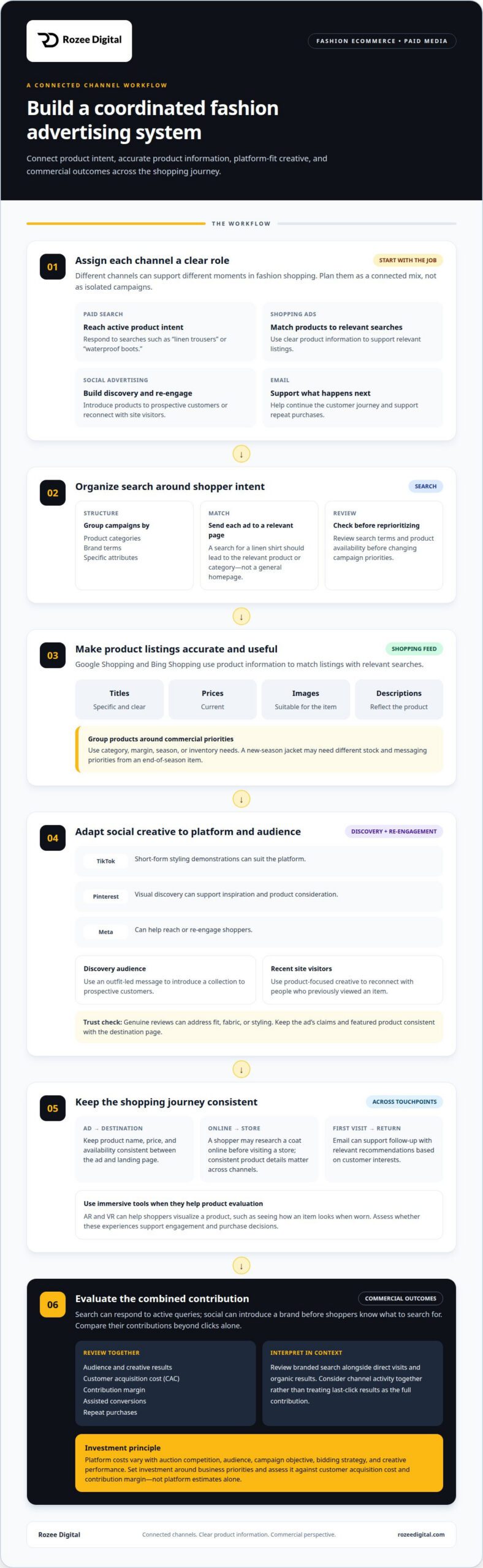
No single channel does all the work in fashion ecommerce advertising. Paid search and Google Shopping reach shoppers actively looking for products, while social advertising builds discovery and can bring interested visitors back. Email can support the customer journey after that first interaction.
That mix matters because fashion shoppers may discover a brand on social, compare products through search, and return later to buy. Treating each platform in isolation can hide how channels work together and whether their combined contribution supports profitable growth.
This guide compares paid search, Shopping, social platforms, and other options for fashion brands. You’ll learn what each channel can do, how to match it to a business goal, and how to assess results using measures such as return on ad spend (ROAS), marketing efficiency ratio (MER), customer acquisition cost (CAC), and customer lifetime value (LTV).
Key Takeaways
- Use paid search to reach shoppers expressing product intent, and structure Shopping campaigns around clear, accurate product information.
- Build social campaigns around discovery and retargeting, using creative that helps shoppers assess fit, styling, and product details.
- Match each platform’s format to its role, from collection-focused visuals to video and audience re-engagement.
- Compare channels using commercial outcomes, not clicks alone, and coordinate paid media with email to support repeat purchases.
1. Paid search and Google Shopping ads
Paid search connects fashion products with shoppers expressing intent through searches such as “linen trousers” or “waterproof boots.” Organize campaigns around product categories, brand terms, and specific attributes, then send each ad to a matching landing page. A search for a linen shirt, for example, should lead to the relevant product or category, not a general homepage. Review search terms and product availability before changing priorities.
Google Shopping and Bing Shopping use product information to match listings with relevant searches. Keep the product feed clear and accurate: use specific titles, current prices, suitable images, and descriptions that reflect the item. Group products by category, margin, season, or inventory needs so decisions support commercial priorities. A retailer promoting a new-season jacket, for instance, can distinguish it from an end-of-season item with different stock and messaging needs.
Make shopping experiences relevant to the shopper’s intent and the information available about each product. Keep ad details consistent with the destination page, including the product name, price, and availability. This reduces friction between the search result and the next step, giving shoppers a clearer path to purchase.
Plan for omnichannel shopping by considering how online product discovery connects with other customer touchpoints. A shopper might research a coat online before visiting a store, so consistent product details matter across channels. AR and VR experiences can help visualize a product, such as showing how an item looks when worn. Use these tools when they help shoppers evaluate an item, then assess whether they support engagement and purchase decisions.
2. Social media promotion and targeted advertising
There is no fixed cost for advertising on Google, Meta, TikTok, or Pinterest. Spend varies with auction competition, audience, campaign objective, bidding strategy, and creative performance. Set investment according to business priorities, and assess it against customer acquisition cost and contribution margin, rather than relying on platform estimates alone.
Give each platform a defined role before developing fashion and apparel social media campaigns. TikTok can suit short-form styling demonstrations, Pinterest can support visual discovery, and Meta can help reach or re-engage shoppers. Treat these as starting points, then tailor the message and creative to the platform’s format, audience, and intended action.
Build campaigns around a clear audience and outcome. A new collection launch might introduce products to prospective customers, while a separate effort can reconnect with recent site visitors. Tailor creative for each group: use an outfit-led message for discovery audiences and product-focused creative for people who previously viewed an item.
Customer reviews can provide social proof when they address apparel concerns such as fit, fabric, or styling. Use genuine feedback alongside relevant product imagery or customer-created content. Keep the ad’s claims and featured item consistent with the destination page. A mismatch between a review, product, and landing page can weaken trust and interrupt the purchase journey.
Paid search and paid social serve different moments in the shopping journey. Search responds to active queries; social can introduce a brand before shoppers know what to search for. Compare their contributions to customer acquisition and later purchases, not clicks alone. Review results by audience and creative, then direct investment toward activity that supports business goals. This grounds platform decisions in commercial performance rather than engagement in isolation.
Costs vary across Google, Meta, TikTok, and Pinterest according to auction competition, audience, campaign goal, bidding strategy, and creative performance. Set investment based on business priorities and assess results against customer acquisition cost and contribution margin.
3. Fashion brands on Facebook, Reddit, YouTube, and Pinterest
Give each channel a distinct role. Meta Business guidance covers Facebook formats such as carousels, while Pinterest Business describes the platform as a visual discovery environment. YouTube’s advertising guidance supports video for showing products in use. Reddit for Business focuses on reaching communities through conversation-led advertising. Use each platform’s guidance to shape creative, then assess whether it fits your audience and brand voice.
Build a recognizable identity across channels. Keep visual cues, product details, and seasonal themes consistent while adapting the execution. A collection launch could use a YouTube styling video, a Pinterest inspiration board, and a Facebook carousel. On Reddit, make the message relevant to the community rather than reusing a generic retail ad.
Brand-name search can capture demand after social exposure. Separate branded queries from generic apparel terms, then align ad copy with each searcher’s intent. Assess branded search alongside direct visits and organic results, rather than treating it as the full contribution of marketing. Search visibility also depends on clear brand and product information.
Direct visits and loyalty can grow through repeated, consistent experiences. A shopper who saves an outfit on Pinterest may later visit a store directly or search for the brand. Email can support follow-up with relevant recommendations based on customer interests. Review channel activity together, including assisted conversions and repeat purchases, to understand how brand storytelling contributes beyond the last click.
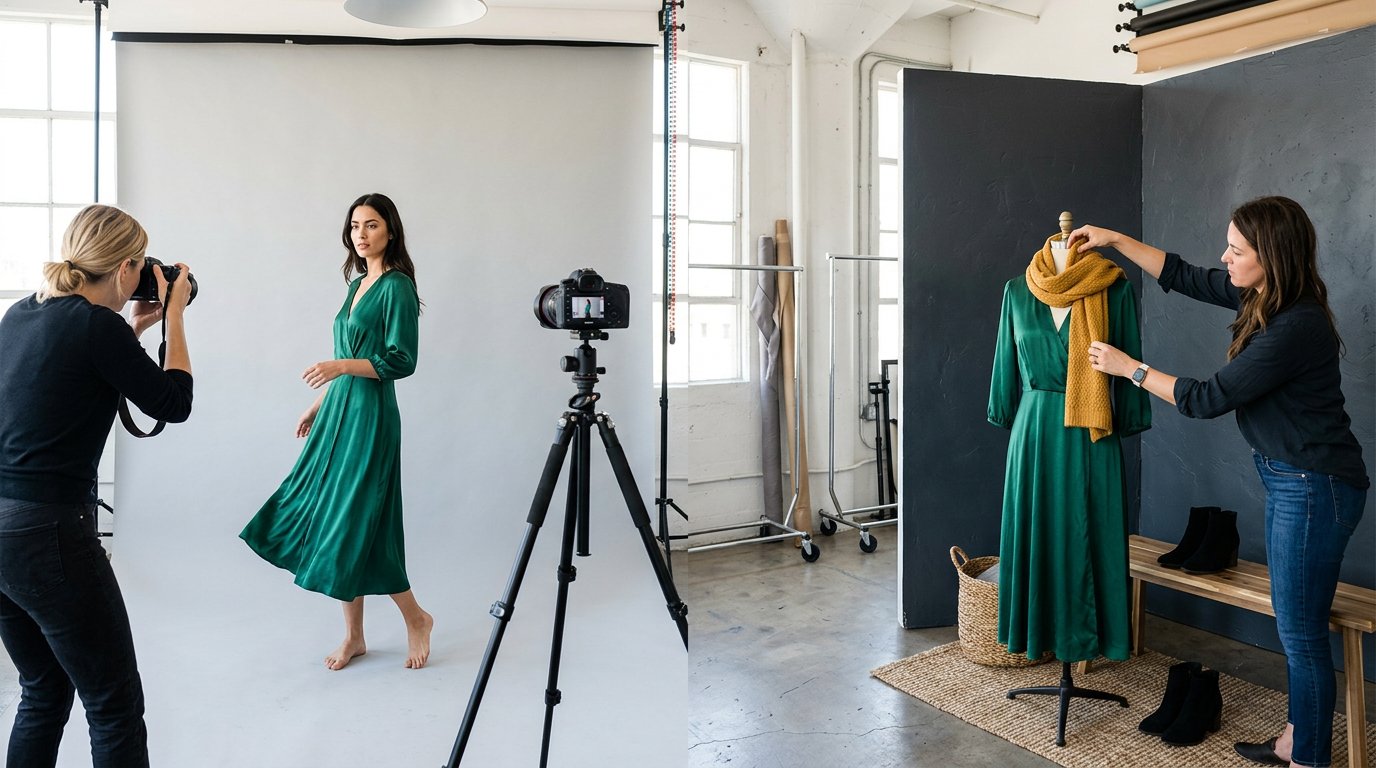
Collection launches: teasers, full-funnel campaigns, influencer amplification, engaged-audience retargeting. Instagram: brand building, discovery; Facebook: retargeting, broad reach. Video ads: lookbooks, styling, campaign footage, behind-the-scenes, influencer try-ons. Carousel ads: collections, complete-the-look suggestions, color/size variations, best sellers.
4. Fashion ecommerce advertising channels
Google Shopping captures active product searches; Meta supports discovery and retargeting; TikTok offers short-form creative; Pinterest supports visual planning. Choose channels based on audience intent, product fit, creative capacity, and the revenue each effort needs to support. Instagram can strengthen visual storytelling, but its role should fit the broader strategy rather than follow trends alone.
For a new ecommerce store, start with a focused assortment, clear product pages, and a primary audience. Select a small set of channels, define the objective, and create distinct messages for prospecting and retargeting. Test product-led creative against styling or brand-story creative. Expand only when measurement and fulfillment can support the additional traffic.
In the United States, treat influencer disclosures and product claims as launch requirements. Make paid relationships clear to consumers, and ensure claims about materials, fit, or performance are accurate and supportable. Build a review step into campaign production so disclosures and advertised claims appear clearly in the relevant post or ad.
Measure performance across channels with consistent tracking and a shared reporting window. ROAS, or return on ad spend, compares attributed revenue with advertising spend; MER compares total revenue with total marketing spend. CAC measures acquisition cost per customer, while LTV estimates customer value over time. Use platform reporting to diagnose delivery, then compare it with store revenue, new-customer share, and repeat purchases. Attribution assigns credit to marketing touchpoints, but no single platform view captures every influence. Compare first-touch, last-touch, and blended results where data allows, and account for channel overlap before reallocating investment.
Build the plan around business outcomes, not platform preferences. Review your fashion channel strategy when you need a disciplined view of audience, creative, measurement, and revenue priorities.
Rozee Digital: Ecommerce ads agency
Rozee Digital helps fashion ecommerce brands manage paid media through its ecommerce ads agency. Turn to the team when campaign structure, channel coordination, or performance measurement needs more focused oversight.
Its Google Ads and PPC capabilities support paid search, while Facebook Ads management addresses paid social campaigns. The right mix depends on your products, audience, and commercial priorities. A useful next step is to clarify which channels need attention and what outcomes your team needs to measure.
Contact Rozee Digital to discuss your fashion advertising priorities.
Build the next phase around profitable growth
Your next move is not necessarily another channel. Start by identifying the customer behavior or commercial constraint that needs attention most. Use that priority to shape your fashion ecommerce advertising plan, then decide how to evaluate progress across acquisition and repeat sales.
For brands that need execution support, Rozee Digital offers ecommerce advertising, Google Ads, and Facebook Ads management. That support can help bring campaign decisions and channel activity into closer alignment with business priorities. The focus should remain on disciplined investment, clear measurement, and learning that informs the next decision, not on activity for its own sake.
Bring your current goals, channel mix, and measurement questions into a conversation with Rozee Digital. Discuss your advertising priorities and identify a practical next step for your brand. A focused plan gives your team a stronger basis for the decisions ahead.
Frequently Asked Questions
What are the benefits of an effective fashion ecommerce strategy?
An effective strategy gives product, marketing, and retention decisions a shared commercial direction. Prioritize the products and audiences most relevant to business goals, then use customer response to refine future activity. For example, compare first purchases and repeat orders by product category before increasing investment. This connects promotion to customer value instead of treating reach as the only outcome.
How Do You Handle Fashion’s Seasonal Nature?
Plan around the product calendar, not just major retail events. Build anticipation before a collection launch, introduce new products at launch, refresh creative mid-season, and use clearance messaging when inventory needs to move. A spring assortment, for example, can have distinct launch and later-season creative. Coordinate stock, offers, and messaging so ads reflect what shoppers can actually buy.
How Do You Target Fashion Audiences?
Define audiences by meaningful differences in intent and customer value. A first-time visitor, a past buyer of dresses, and a repeat customer considering accessories need different messages. Use available browsing and purchase behavior to create relevant segments, then match each with suitable products and creative. Assess audience quality through conversions and subsequent purchases, not engagement alone.
How can small fashion brands compete with big names?
Smaller fashion brands can compete by making their point of difference unmistakable. Focus creative on a specific product benefit, design perspective, or customer need instead of imitating a large retailer’s broad messaging. Use customer feedback to identify valued details, then build focused campaigns around those products. A clear position helps a smaller assortment communicate with greater precision.
How often should I review my fashion marketing techniques?
Review fashion marketing techniques at least every three months. Use each review to assess which products, messages, and audience segments are contributing to business goals. Also account for changes in inventory, seasonality, and customer response. If a collection launch or major promotion changes the commercial plan, review its performance separately so useful lessons inform the next decision.
What Ad Formats Drive Fashion Sales?
Choose formats according to the product story and the information shoppers need. Carousel ads can present coordinated pieces or product variations, while video can show movement, styling, or garment details. Static creative can keep the message focused on one item. Test formats against the same audience and objective, then compare qualified visits and purchases to identify what merits further investment.