The welcome flow is the first priority for conversion. It reaches new subscribers while their interest is fresh, introduces the brand, and gives them a clear path to a first purchase. Strong email flows for ecommerce retention start here, but they go beyond cart recovery.
Cart reminders can bring interested shoppers back to an unfinished purchase, but a single recovery sequence won’t build a lasting retention system. Welcome, post-purchase, replenishment, and win-back messages each serve a different point in the customer journey.
This guide explains how to prioritize the welcome flow, structure cart recovery, and coordinate timing with segmentation. It also covers the foundational flows that support repeat purchases and customer lifetime value (the total value a customer is expected to generate), helping you build a lifecycle program around commercial outcomes rather than disconnected automations.
Key Takeaways
- Prioritize the welcome sequence to turn new subscriber interest into a first purchase, then build retention beyond the initial conversion.
- Make cart recovery timely and relevant, with messages that address the shopper’s likely reason for leaving.
- Use customer behavior and purchase history to shape send timing and product recommendations.
- Build a connected set of foundational flows, including post-purchase, replenishment, and win-back messages.
1. What is the most important ecommerce email flow for conversion?
The welcome sequence is the first priority for turning new subscribers into first-time customers. It reaches people after they choose to hear from a brand, while their interest is active. Strong email flows for ecommerce retention begin by making that first interaction relevant. Send the opening message at signup, introduce the product range, and give subscribers one clear next step toward purchase. Follow with messages that address likely questions, such as sizing, ingredients, delivery, or product selection. Measure first-purchase conversion alongside clicks; opens alone don’t show whether the sequence generates orders.
Keep each message focused on one decision. A skincare brand, for example, could introduce its product categories, explain how to choose a routine, then feature customer reviews. A shopper who has already purchased should leave the welcome sequence. This prevents a first-purchase offer from reaching an existing customer and gives the next message a more relevant purpose.
After purchase, shift from acquisition to customer support. Send an order confirmation immediately, then follow up with product education related to the item purchased. A brand selling equipment might explain setup and care; a food brand could share storage or preparation guidance. Useful instructions help customers get value from their purchase and give the brand a relevant reason to communicate again.
Use purchase data to personalize post-purchase recommendations. Suggest a complementary item only when it fits the original order, rather than repeating generic bestsellers. A customer who buys a camera might receive a compatible accessory suggestion, just as an art retailer like First4Frames Gallery can suggest custom framing to complement an artwork purchase. Separate cross-sells from replenishment: accessories extend an order, while consumables need reminders timed to their expected use cycle.
Request a review after delivery, once the customer has had time to try the product. Keep the request direct and the process straightforward. For replenishment, use the product’s consumption pattern and order history to guide timing. Track repeat purchases, review submissions, and revenue per recipient. These measures show whether email flows for ecommerce retention support lasting customer value, not just an initial conversion.
2. Abandoned cart recovery
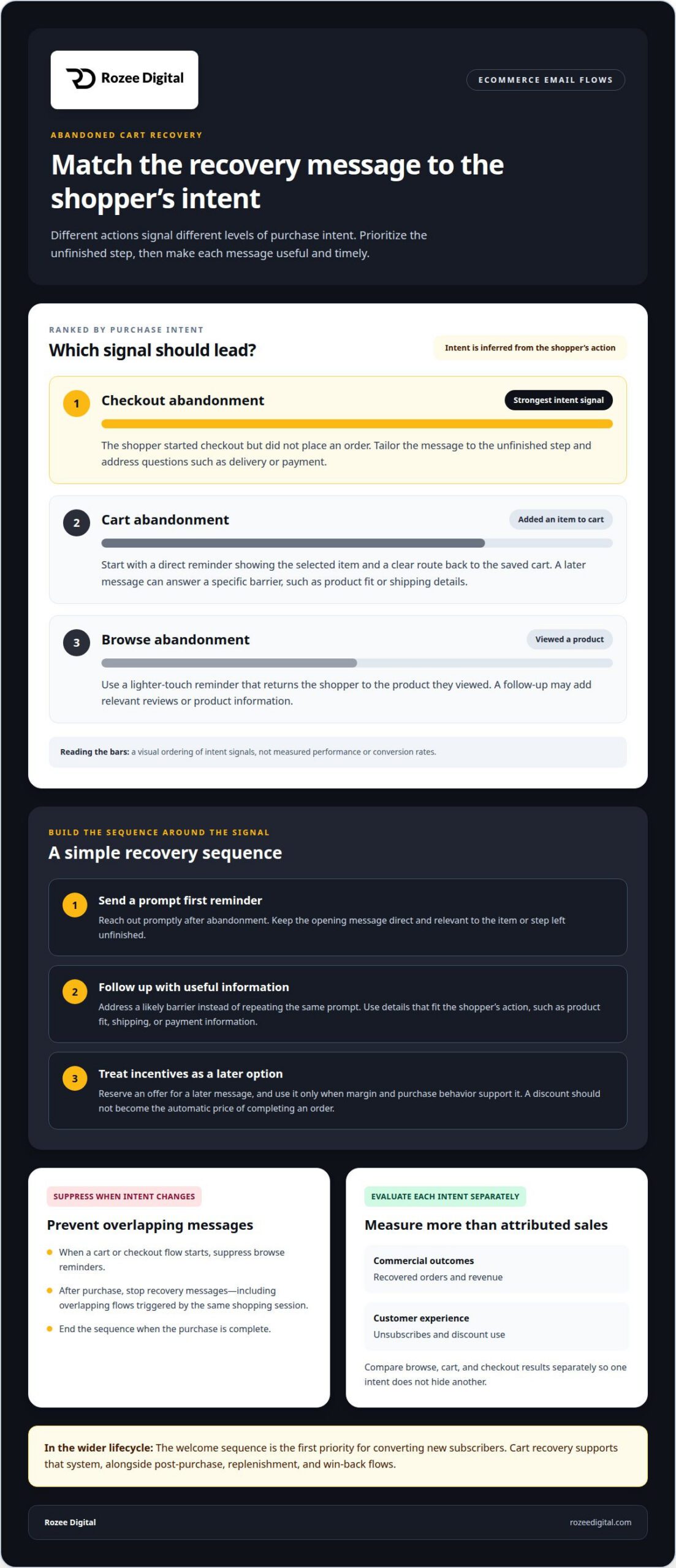
Effective abandoned cart and checkout email sequences start with a relevant reminder, then address likely purchase barriers. Send the first message promptly after abandonment, and follow up later with useful information rather than repeating the same prompt. End the sequence when a purchase is complete. This keeps recovery tied to active intent, not an outdated shopping session.
Distinguish three shopper signals. Browse abandonment means someone viewed a product without adding it to a cart. Cart abandonment follows an add-to-cart action, while checkout abandonment occurs when someone starts checkout but doesn’t place an order. Checkout abandonment signals stronger purchase intent, so tailor the message to the unfinished step. Address questions about delivery or payment; browse reminders can return shoppers to the product they viewed.
Keep the first abandoned cart email direct. Show the selected item and its image, with a clear route back to the saved cart. A follow-up can address a specific barrier, such as product fit or shipping details. Reserve an incentive for a later message, and use it only when margin and purchase behavior support the offer. A discount shouldn’t become the automatic price of completing an order.
Browse abandonment calls for a lighter touch. Send a reminder that brings shoppers back to the product, then consider a follow-up with useful details, such as relevant reviews or product information. Suppress browse messages when a cart or checkout flow has started, since the higher-intent action should take priority. Suppress recovery messages after purchase, including overlapping flows triggered by the same shopping session.
Measure recovered orders and revenue alongside unsubscribes and discount use. Compare cart, checkout, and browse results separately; combining them can hide which intent drove conversion. Review the sequence in terms of customer experience as well as attributed sales. Make each recovery flow’s role within the wider retention plan clear and distinct.
3. Email flow timing, segmentation, and dynamic product blocks
An automated email flow is a sequence triggered by customer behavior, attributes, or lifecycle stage. A product view, completed purchase, and repeat-order pattern each signal different intent. Build segments around those actions, then tailor the message. For example, a first-time buyer and a loyal repeat customer shouldn’t receive identical cross-sell recommendations. Clear segment rules make each trigger useful.
Set timing around the customer’s likely next need rather than a fixed calendar. Product instructions make sense when the order has arrived; replenishment reminders should reflect the product’s use cycle and the customer’s purchase history. For products with varied usage patterns, use prior reorder behavior to refine the trigger. Set exit conditions too, such as removing customers from replenishment messages after they reorder.
Dynamic product blocks make recommendations relevant to each segment. A customer who bought a cleanser might see a compatible moisturizer, while someone who viewed a product receives that item rather than a generic bestseller. Use purchase history, recent browsing, and product compatibility as selection rules. Include social proof only when it relates to the recommended product, so reviews support the decision instead of distracting from it.
Measure each flow according to its purpose. Track revenue per recipient and conversion for messages designed to drive purchases; track click-through rate when the goal is product discovery. Browse and post-purchase flows have different audiences, triggers, and objectives, so compare each with its own historical baseline. Avoid judging every message against a single benchmark.
Test one variable at a time, such as a subject line, product block, or send trigger. Keep the audience and offer consistent during the comparison, then assess revenue, clicks, and unsubscribes together. Review how each message supports the flow’s purpose. This helps distinguish a genuine improvement from a shift in clicks between automated messages.
4. Foundational ecommerce email flows
Choose an email platform that fits your data, workflow, and reporting needs. Compare how each option handles subscriber segments, purchase triggers, suppression rules, dynamic content, and revenue attribution. Pricing varies by provider and account requirements, so assess the billing model against your contact volume and required capabilities. Prioritize operational fit over features your team won’t use.
A retention lifecycle should connect welcome, cart, checkout, browse, post-purchase, replenishment, and win-back flows. Each has a distinct purpose: welcome introduces the brand, while replenishment supports a likely repeat purchase. For U.S. programs, account for CAN-SPAM and consent handling when designing flows. Consider clear sender identification, opt-out handling, and consent practices when planning commercial messages.
Win-back and re-engagement flows can help address customer churn by identifying previous buyers who have stopped engaging or purchasing. Use product repurchase patterns and customer activity to decide when outreach is relevant. For example, a subscriber who still opens messages but hasn’t reordered may need a different message from someone who has stopped engaging altogether. Suppress the flow after a new purchase or opt-out.
Protect deliverability and customer experience with accurate segments, relevant content, and controlled sending. Suppress messages after purchase and prevent overlapping flows from sending competing offers. Repeated discounts can encourage shoppers to delay checkout, so use incentives selectively and assess their effect on order margin. Review complaints, unsubscribes, and engagement alongside attributed revenue to spot friction.
Foundational flows work as a connected system, not isolated automations. Review performance regularly and refresh messages when customer behavior or product needs change. To shape lifecycle email marketing around your business goals, discuss an email marketing program.
Rozee Digital: Ecommerce ads agency
Rozee Digital helps ecommerce and DTC brands connect email marketing with paid acquisition. When welcome, cart recovery, and post-purchase flows need to work alongside customer acquisition, coordinated planning can align retention with broader growth priorities.
Turn to Rozee Digital when your team needs support with ecommerce advertising or email marketing, especially when disconnected channel plans make performance harder to assess. The focus is commercial: connect customer journeys, clarify each channel’s role, and evaluate activity against business outcomes. ROAS measures revenue generated relative to advertising spend; MER compares total revenue with total marketing spend. These metrics help frame paid media performance alongside retention activity.
If you’re ready to discuss how email and acquisition fit your growth plan, contact Rozee Digital.
Build retention into your growth plan
Retention works best as an operating discipline, not a set of isolated messages. Give each flow a clear commercial role, then assess how it supports repeat purchasing and profitability alongside customer acquisition. A disciplined system of email flows for ecommerce retention can make lifecycle communication more deliberate while keeping a clear view of marketing’s contribution to business performance.
Rozee Digital supports ecommerce brands through ecommerce advertising, including Google Ads and Facebook Ads. That makes it a relevant partner when acquisition activity and retention planning need a more connected commercial perspective. The next step is to identify where your current growth plan needs stronger alignment, then decide what support fits that priority.
Discuss your ecommerce growth plan with Rozee Digital. A focused conversation can help define a practical next move.
Frequently Asked Questions
What is the most important ecommerce email flow for conversion?
The welcome flow is usually the first one to prioritize because it reaches newly subscribed shoppers while their interest is active. Assess it by signup source, rather than treating every subscriber as one audience. For example, compare subscribers acquired through a product guide with those who joined during checkout. This can reveal which audience needs product education, social proof, or a more direct path to purchase.
Are Email Flows Effective To Use for Ecommerce?
Yes. Email flows can make customer communication responsive to actions such as browsing, purchasing, or approaching a likely reorder. Their value depends on relevant messages, accurate triggers, and sound suppression logic. To assess whether a flow adds value, compare its results with a similar group that didn’t receive the messages. This helps distinguish incremental purchases from orders that may have happened anyway.
How much revenue should email flows generate?
There is no single revenue target that fits every ecommerce business. Product margins, repeat-purchase cycles, list quality, and attribution settings all shape reported flow revenue. Compare revenue per recipient and resulting order margin across flows, then assess the trend against your own baseline. Keep the attribution window consistent; otherwise, a reporting change can look like improved performance without a real change in customer behavior.
How do VIP flows impact your bottom line?
VIP flows focus on customers whose buying behavior shows strong value to the business. A practical segment might use purchase recency, order frequency, and total spend rather than email opens alone. Tailored product access or useful service information can strengthen loyalty without defaulting to discounts. Track repeat orders and order margin within the segment to see whether the program supports profitable customer value.
How do the flows map to the customer lifecycle?
Map flows to customers’ changing needs: welcome messages introduce the brand, browse and checkout messages support a purchase decision, and post-purchase communication helps customers use what they bought. Replenishment can follow product consumption patterns, while win-back messages address lapsed activity. For example, a first order should move a customer out of acquisition messaging and into an appropriate post-purchase journey.
How do you measure whether a flow is working?
Choose a primary metric that matches each flow’s purpose. Track completed orders and revenue for purchase-focused messages, and clicks for product-discovery messages. Add unsubscribe and complaint trends as customer-experience guardrails. Compare performance by audience and acquisition source, not just total sends. Then review the full sequence, since a strong first email can hide weak engagement or unnecessary messages later.