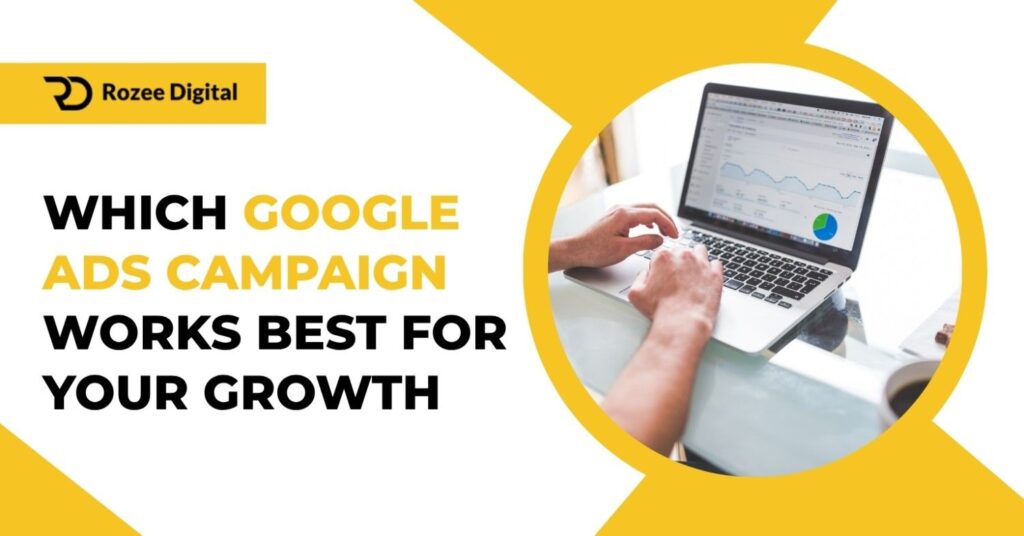
Google Ads can feel overwhelming when you’re starting out. According to Enhencer, the average ROI for Google Ads in 2024 is around 200%, meaning businesses see about $2 in revenue for every $1 spent on Google Ads on average. This can be considered an authentic benchmark for ROI in 2024 paid ads campaigns.
Most business owners pick the wrong campaign type and waste money fast. They choose what sounds good instead of what actually works for their situation. Understanding which Google Ads campaign works best for your growth changes everything about your advertising results.
This guide breaks down every campaign type in simple terms. You’ll learn what each one does, when to use it, and real benchmarks to expect. No confusing jargon or technical talk. Just clear actionable advice you can use today.
Ready to launch high-performing Google Ads campaigns? Book your free strategy call and start turning clicks into sales.
Understanding Campaign Types in Google Ads
Google Ads offers six main campaign types. Each one serves different purposes and reaches people in different ways. Picking the right type is the most important decision you’ll make.
Why Campaign Type Selection Matters So Much
Your campaign type determines where your ads appear and who sees them. Search campaigns show text ads on Google search results. Display campaigns show banner ads across millions of websites. Shopping campaigns show product images in search results. Each reaches different audiences at different stages.
The wrong campaign type wastes your entire budget quickly. Running display ads when you need direct sales rarely works well. Using search ads when building brand awareness costs too much. Mismatched campaign types to goals is the number one reason Google Ads fails.
Campaign types also determine what optimization options you have available. Shopping campaigns need product feeds. Video campaigns require video content. Performance Max uses automated bidding. Understanding these requirements before starting saves massive headaches later.
Most successful businesses use multiple campaign types together strategically. Search campaigns capture high-intent buyers. Display campaigns build awareness. Shopping campaigns showcase products visually. The combination works better than any single type alone.
How Google Ads Campaign Structure Works
Google Ads organizes everything in a hierarchy. Campaigns sit at the top level. Each campaign contains ad groups. Ad groups contain individual ads and keywords. Understanding this structure helps you organize and optimize effectively.
Campaign level settings control budget, location targeting, and bid strategy. These settings apply to everything inside that campaign. Choose these carefully because changing them later affects all your ads simultaneously.
Ad groups let you organize ads by theme or product category. Good organization makes optimization much easier. Poor organization creates messy accounts that waste time and money constantly.
Each campaign type has unique settings and options. Search campaigns need keywords. Display campaigns need audience targeting. Shopping campaigns need product data. Learning each type’s specific requirements is essential for success.
What Kind of Google Ads Campaign is Best for You
Different businesses need different campaign types. Your industry, goals, and budget all affect which campaigns work best. Here’s how to match campaign types to your specific situation.
Search Campaigns Capture High Intent Buyers
Search campaigns show text ads when people search specific keywords. These are the classic Google ads everyone knows. Someone searches “buy running shoes” and sees your ad above organic results.
Search campaigns work best for businesses with clear product names or categories. People must actively search for what you sell. If nobody searches for your products, search campaigns won’t work well.
These campaigns deliver the highest intent traffic available. People searching are actively looking for solutions right now. They’re ready to buy, not just browsing casually. This intent makes search campaigns convert better than other types.
Cost per click can be high on search campaigns. Popular keywords in competitive industries cost several dollars per click. But the high intent often justifies higher costs. Calculate your profit margins carefully before committing big budgets.
Shopping Campaigns Showcase Products Visually
Shopping campaigns display product images, prices, and store names directly in search results. These visual ads attract attention and qualify clicks better. People see exactly what you’re selling before clicking.
Shopping campaigns work perfectly for ecommerce stores selling physical products. Clothing, electronics, home goods, and similar items perform exceptionally well. Service businesses can’t use Shopping campaigns effectively.
These campaigns often deliver better return on investment than search text ads. Images communicate faster than words. Prices shown upfront filter out people not willing to pay. Only qualified interested shoppers click through.
Setting up Shopping campaigns requires a product feed. This structured data file contains all your product information. Creating and maintaining this feed adds complexity. But the results usually justify the extra effort involved.
Display Campaigns Build Awareness Broadly
Display campaigns show banner ads across millions of websites in Google’s network. These are the image ads you see on news sites, blogs, and apps. They reach people not actively searching for your products.
Display campaigns work best for brand awareness and remarketing. You’re interrupting people browsing other content. This works for building familiarity but rarely drives immediate sales. Use a display for the top of your funnel.
Costs per click are much lower on display than search. You can reach thousands of people for what search costs to reach hundreds. The tradeoff is much lower intent and conversion rates.
Targeting options are incredibly sophisticated on display. You can target by interests, demographics, websites, and behaviors. Proper targeting separates successful display campaigns from wasteful ones. Take time learning targeting options thoroughly.
Video Campaigns Engage on YouTube
Video campaigns show ads on YouTube and across Google’s video partners. These can be skippable or non-skippable ads before videos. Video content engages differently than text or images.
Video campaigns work well for products needing demonstration or explanation. Showing products in action builds desire and understanding. Complex products benefit especially from video advertising formats.
YouTube reaches massive audiences spending hours watching content. Over two billion people use YouTube monthly. That’s a huge potential reach for almost any business targeting online consumers.
Creating quality video content requires more resources than text ads. Production costs money and time. But effective videos can run for months or years. The upfront investment pays off through long-term use.
Performance Max Campaigns Use Automation
Performance Max is Google’s newest campaign type using full automation. You provide creative assets and conversion goals. Google’s AI optimizes delivery across all their networks automatically.
Performance Max works well for businesses wanting simplicity. You don’t manually manage keywords, audiences, or placements. Google handles everything based on machine learning. This saves time but reduces control.
These campaigns need sufficient conversion data to optimize effectively. Google’s AI learns what works from your actual results. New accounts without conversion history struggle with Performance Max initially.
Many advertisers see strong results from Performance Max campaigns. Google’s automation often finds opportunities manual management misses. But some advertisers prefer manual control over automated decisions.
App Campaigns Drive Mobile Downloads
App campaigns promote mobile applications across Google’s networks. These specialized campaigns drive app installs and in-app actions. Only relevant if you have a mobile app obviously.
App campaigns work automatically once set up properly. You provide text, images, and budget. Google tests combinations and optimizes for installs or actions. The automation handles the complexity of mobile advertising.
Cost per install varies dramatically by app category. Gaming apps compete fiercely for users. Utility apps often have lower costs. Research your category benchmarks before setting budgets.
Tracking in-app conversions requires proper SDK integration. This technical setup lets Google measure what happens after install. Without proper tracking, optimization suffers significantly.
How to Choose the Right Google Ads Campaign Type
Selecting the optimal campaign type depends on multiple factors. Your business model, goals, budget, and resources all matter. Follow this framework for making smart decisions.
Match Campaign Type to Your Business Goals
Start by defining what you want to accomplish clearly. Do you need immediate sales right now? Build awareness for later? Drive store visits or phone calls? Different goals need different campaign types.
Direct response goals like sales or leads work best with Search and Shopping. These campaigns capture high-intent people ready to act now. They deliver measurable return on ad spend quickly.
Brand awareness goals work better with Display and Video campaigns. You’re building familiarity and consideration over time. Results take longer but cost less per impression.
App promotion obviously requires App campaigns specifically. Nothing else will drive installs effectively. Similarly, product sales almost always benefit from Shopping campaigns if you’re eligible.
Consider Your Budget and Competition
Higher budgets allow testing multiple campaign types simultaneously. You can run Search, Shopping, and Display together. Smaller budgets require focusing on one or two types maximum.
Competitive industries have expensive clicks on Search campaigns. Research average costs in your industry before committing. If costs are too high, consider Display or Video instead.
Shopping campaigns often deliver better efficiency than Search in ecommerce. The visual format and price transparency qualify traffic better. Start here if the budget is limited and you sell products.
Performance Max campaigns need decent budgets to gather optimization data. Very small daily budgets don’t give enough volume for AI learning. Save Performance Max for when you can spend meaningfully.
Assess Your Creative Assets and Resources
Search campaigns only need text ads. You can write these yourself quickly. No design skills or external resources required. This makes Search accessible for everyone.
Shopping campaigns require product photos and data feeds. Do you have quality images for all products? Can you maintain updated inventory feeds? If not, shopping campaigns become difficult.
Video campaigns obviously need video content. Do you have videos or budget to create them? Stock footage and simple editing work for some businesses. Others need professional production.
Display campaigns need banner images in multiple sizes. You need design skills or a designer. Creating effective display ads takes more effort than writing text.
Search vs Display Campaign: Which Performs Better
The eternal question: search or display? The answer is both have roles. But they serve different purposes requiring different expectations.
When Search Campaigns Outperform Display
Search campaigns win when people actively look for your products or services. High commercial intent searches convert much better than interruption advertising. Someone searching “buy leather jacket” is ready to purchase now.
Conversion rates on Search typically run 2-5x higher than Display. The intent difference explains this gap completely. People searching want what you offer. Display viewers are browsing other content.
Search campaigns are easier to measure and attribute directly. Someone searches, clicks your ad, and buys. The attribution is clear. Display contributes to journeys less directly.
Immediate return on ad spend almost always favors Search over Display. If you need sales this month, Search delivers faster results. Display builds value over longer timeframes.
When Display Campaigns Make More Sense
Display campaigns reach people not searching for you yet. This builds awareness among new potential customers. You’re getting in front of people before they know they need you.
Display costs dramatically less per click than Search. You can reach thousands for Search’s cost of reaching hundreds. This volume builds familiarity even without immediate conversions.
Remarketing through Display campaigns works incredibly well. Showing ads to people who visited your site brings them back. This use case delivers excellent return on investment consistently.
Visual products benefit from Display’s image ads. Fashion, home decor, and similar categories communicate better visually. Display lets you show products attractively across the web.
Using Both Campaign Types Together Strategically
The smartest strategy combines Search and Display purposefully. The display builds awareness and captures audiences. Search converts them when they’re ready. Together they cover the entire funnel.
Display campaigns can feed remarketing audiences to Search. People who clicked display ads then search for you. Your Search campaigns capture that branded traffic. The campaigns work together synergistically.
Budget allocation matters when running both types. Start with 70% Search and 30% Display typically. Adjust based on actual performance in your account. Let data guide the split over time.
Measure both campaigns’ contribution to conversions. Use assisted conversions reporting to see Display’s full value. Last-click attribution undervalues Display campaigns significantly.
Google Campaign Strategy for Maximum ROI
Building effective campaigns requires more than picking a type. Your strategy, structure, and optimization approach determine actual results and profitability.
Start with One Campaign Type and Master It
Trying everything simultaneously spreads you too thin. Focus on one campaign type initially. Learn its quirks and optimization methods deeply. Master it before adding complexity.
Most ecommerce businesses should start with Shopping campaigns. These deliver strong results relatively quickly. The learning curve is moderate, not overwhelming. Success here builds confidence and budget.
Service businesses should typically start with Search campaigns. Target your most important keywords first. Expand gradually as you learn what works. Search gives direct feedback quickly.
Once one campaign type performs profitably, add another strategically. Is shopping working well? Add Search to capture branded traffic. Search performance? Add Display for remarketing. Build systematically.
Structure Campaigns for Easy Optimization
Organize campaigns by product category, service type, or goal. Clear structure makes analysis and changes much easier. Messy accounts waste time and hide insights.
Use single keyword ad groups for Search campaigns. This gives maximum control over bids and ads. Yes, it creates more ad groups. But the control improves performance significantly.
Separate branded and non-branded keywords into different campaigns. Branded searches perform differently and need different strategies. Mixing them hides the performance of both.
Create separate campaigns for different geographic locations if relevant. Cities or countries often perform differently. Separation allows custom budgets and strategies per location.
Test and Optimize Continuously
Successful Google Ads requires constant testing and improvement. What worked last month might not work now. Markets change. Competition shifts. You must adapt continuously.
Test new ad copy regularly in Search campaigns. Even small improvements in click rates or conversion rates multiply across clicks. Run A/B tests comparing variations systematically.
Try different audience targeting in Display campaigns. Narrow targeting reaches fewer but more relevant people. Broad targeting reaches more but less qualified people. Test to find your sweet spot.
Adjust bids based on performance data. Increase bids on profitable keywords or products. Decrease or pause poor performers. Simple bid management delivers significant improvements.
Review search terms report weekly in Search campaigns. Add negative keywords to prevent wasted clicks. Discover new keyword opportunities. This simple habit dramatically improves efficiency.
Common Mistakes in PPC Campaign Selection
Even experienced advertisers make these campaign selection errors. Avoiding them saves thousands in wasted.
Choosing Based on Features Instead of Results
Many advertisers pick campaign types based on what seems cool or new. Performance Max is the latest so they use it exclusively. But newest doesn’t mean best for your situation.
Choose campaign types based on proven results in your industry. Research what works for similar businesses. Copy success rather than experimenting blindly with every option.
Simple often beats complex in Google Ads. Basic Search campaigns outperform fancy automated ones frequently. Master fundamentals before adding complexity or automation.
Test new campaign types carefully with small budgets. Don’t commit your entire budget to unproven approaches. Validate performance before scaling spending significantly.
Expecting Immediate Results from Every Campaign Type
Different campaign types have different timelines to results. Search campaigns can deliver sales within days. Display campaigns take weeks to show value. Unrealistic expectations cause premature quitting.
Brand awareness campaigns need time to work. You’re building familiarity that converts later. Judging Display by immediate sales misses the point. Track assisted conversions and brand searches instead.
Performance Max campaigns need learning periods. Google’s AI requires data to optimize effectively. Give new campaigns at least two weeks before judging. Patience allows proper evaluation.
Shopping campaigns perform faster than brand campaigns but slower than Search. Product discovery takes time even with high intent. Week one performance doesn’t predict month three results.
Neglecting Mobile Experience and Optimization
More than half of Google Ads clicks come from mobile devices now. But many advertisers optimize only for desktop. This mismatch kills conversion rates unnecessarily.
Test your landing pages on actual mobile phones regularly. Sites that look great on desktop often break on mobile. Slow loading or poor mobile design waste ad clicks immediately.
Use mobile-specific ad copy when possible. “Call now” works better on mobile. “Learn more” works better on the desktop. Small adjustments improve performance noticeably.
Check mobile conversion rates separately from desktop. If mobile converts terribly, either fix the experience or reduce mobile bids. Don’t waste money on traffic that doesn’t convert.
Ignoring Audience Signals and Data
Google provides incredible data about who responds to your ads. Many advertisers ignore this gold mine of insights. Demographics, locations, and behaviors all tell stories.
Review demographic performance monthly minimum. Age and gender groups perform differently. Adjust bids or targeting based on what actually works. Don’t treat all audiences identically.
Location reports reveal geographic performance. Some cities or countries deliver better results. Increase bids there. Decrease or exclude poor locations. Simple geographic optimization improves efficiency.
Device performance varies significantly often. Mobile, desktop, and tablet users behave differently. Bid adjustments by device capture this reality. Review and adjust monthly.
Benchmarks to Expect from Different Campaign Types
Understanding realistic performance benchmarks prevents disappointment and poor decisions. These ranges represent typical performance across industries.
Search Campaign Performance Benchmarks
Average click-through rate on Search campaigns ranges from 2% to 5% typically. Branded campaigns see higher rates around 10% or more. Non-branded competitive keywords see lower rates around 2-3%.
Conversion rates on Search campaigns average 3% to 5% for most industries. Top performers achieve 8% to 10% or higher. Below 2% indicates problems with targeting or landing pages.
Cost per click varies enormously by industry and keyword competition. Some keywords cost $0.50 while others cost $50 or more. Research your specific keywords before setting budgets.
Return on ad spend for Search campaigns should target 400% minimum (4:1 ratio). Many profitable businesses maintain 600% to 800% ROAS. Below 200% indicates inefficiency or poor margins.
Shopping Campaign Performance Benchmarks
Shopping campaigns typically see higher click-through rates than text Search ads. Average rates run 0.5% to 1% depending on product category. Visual products perform on the higher end.
Conversion rates on Shopping campaigns often exceed Search text ads. Average rates run 2% to 4% since images qualify traffic better. Strong product-market fit can achieve 5% plus.
Cost per click on Shopping tends to be lower than Search. Competition is less intense in Shopping. Average CPCs range from $0.30 to $1.50 for most product categories.
Return on ad spend should target 300% to 500% minimum on Shopping. Many stores achieve 500% to 800% or higher. Shopping often delivers the best ROAS of any campaign type.
Display and Video Campaign Benchmarks
Display campaigns have much lower click-through rates than Search. Average rates run 0.1% to 0.5%. This is normal and expected. The display reaches people not actively searching.
Conversion rates on Display typically run 0.5% to 1%. Again, much lower than Search due to lower intent. Judge Display by assisted conversions, not just last-click conversions.
Cost per click on Display is significantly cheaper. Average CPCs range from $0.10 to $0.50. The volume possible at these costs makes Display valuable despite lower intent.
Video campaigns on YouTube see varied engagement. Average view rates run 15% to 30%. Skippable ads need a compelling first few seconds. Non-skippable ads guarantee views but cost more.
Real Success Stories with Strategic Campaign Selection
These examples show how businesses picked the right campaign types for their situations. Learning from others’ experiences accelerates your own success.
Ecommerce Store Scales with Shopping and Search Together
An outdoor gear retailer started with only Shopping campaigns. These performed well delivering steady sales. But they noticed branded search volume increasing without campaigns to capture it.
They added Search campaigns targeting their brand name. These captured people specifically looking for them. Conversion rates on branded Search exceeded 15%. Cost per click stayed under $0.50.
Then they added non-branded Search campaigns for product categories. “Hiking backpacks” and similar terms captured new customers. These combined with Shopping campaigns for maximum visibility.
Revenue increased 240% over twelve months using this campaign combination. Shopping built awareness and captured browsing shoppers. Search converted high-intent searchers. Together they covered the entire funnel systematically.
Service Business Dominates with Search and Display
A legal services firm needed local clients consistently. They started with Search campaigns targeting legal services keywords. Results were good but cost per click was very high.
They added Display campaigns for remarketing to website visitors. People who visited but didn’t call saw display ads reminding them. This brought back prospects at much lower cost.
Then they expanded Display with demographic targeting reaching their ideal clients. Professionals aged 35-55 in specific neighborhoods. The display built awareness among the right people.
Monthly leads increased 180% while cost per lead dropped 35%. Search provided immediate leads. The display built a pipeline and brought people back. The combination worked better than either alone.
Startup Grows Fast with Performance Max Campaigns
A new subscription box service had limited time for campaign management. They chose Performance Max for its automation. Google’s AI handled optimization across all networks.
They provided quality product photos, videos, and ad text. Then let Performance Max run with clear conversion tracking. The AI learned what worked quickly.
Within three months, Performance Max delivered consistent profitable growth. Customer acquisition cost stayed predictable. The founder focused on product and operations while ads ran automatically.
Revenue grew from zero to $50,000 monthly in six months. Performance Max’s automation made this growth manageable for a tiny team. Manual campaign management wouldn’t have been possible.
Key Takeaways for Choosing Your Campaign Type
Picking the right Google Ads campaign type dramatically affects your results. These principles guide smart decisions regardless of your specific business.
Start by clearly defining your business goals and timeline. Immediate sales need Search or Shopping. Brand building needs Display or Video. Match campaign types to actual goals, not what sounds interesting.
Research what works in your specific industry before deciding. Don’t guess or experiment blindly. Learn from others’ successes and failures. Copy proven approaches then optimize.
Begin with one campaign type and master it before expanding. Spreading too thin teaches nothing. Depth beats breadth in learning Google Ads effectively.
Budget affects which campaign types make sense. Small budgets should focus on high-intent Search or Shopping. Larger budgets can add Display and Video for full-funnel coverage.
Test continuously but give campaigns time to optimize. Don’t judge performance after just days. Most campaigns need weeks to show true potential with proper data.
Use multiple campaign types together strategically once you master basics. They complement each other when used purposefully. Search and Shopping together outperform either alone consistently.
Ready to maximize your growth with the right Google Ads strategy? Rozee Digital specializes in helping ecommerce brands select and optimize the perfect campaign types for their goals. Our data-driven approach ensures every dollar delivers maximum return.
📞 Call us at +447887880993 or book your free growth strategy call today to start scaling smarter.
Frequently Asked Questions
Q.1: Which Google Ads campaign works best for your growth if you’re just starting?
Shopping campaigns for ecommerce stores and Search campaigns for service businesses typically deliver fastest profitable results for beginners.
Q.2: What kind of Google Ads campaign is best for brand awareness?
Display and Video campaigns work best for building brand awareness since they reach people not actively searching and cost much less per impression.
Q.3: How do I choose between Search and Shopping campaigns?
Use Shopping if you sell physical products with good images. Use Search if you provide services or have complex offerings needing explanation.
Q.4: What’s the minimum budget needed for Google Ads campaigns?
Start with at least $500-1000 monthly to gather meaningful data. Smaller budgets don’t provide enough volume for proper optimization and learning.
Q.5: How long before I see results from different campaign types?
Search and Shopping can deliver sales within days. Display and Video need 2-4 weeks minimum. Performance Max needs 2-3 weeks for AI optimization.