

Turn Prospects into Loyal Customers with Customer Journey

In today’s digital landscape, businesses need to focus not just on attracting customers but also on guiding them through a journey that builds lasting relationships and maximizes value. According to HubSpot, businesses that focus on customer experience can see up to 80% higher revenue than those that don’t. The Customer Value Journey (CVJ) model is essential for businesses looking to understand this process. It helps identify the steps customers take, from their first interaction with your brand to becoming loyal advocates. This guide will explore the Customer Value Journey, its key stages, and how businesses can optimize this journey for better engagement and growth.
What is the Customer Value Journey?
The Customer Value Journey (CVJ) is a framework that illustrates the stages customers go through, from discovering a brand to becoming loyal advocates. Each stage represents a different level of engagement with your brand, and understanding these stages allows businesses to provide the right value at the right time.
Turn your Customer Value Journey into real growth. Book a free strategy call today and optimize every stage for results. Call +44 7887 880993.
The 8 Key Stages of the Customer Value Journey
The Customer Value Journey is broken down into 8 stages that help businesses map out the steps customers take as they move through their relationship with your brand. Let’s dive into these stages:
Awareness
At this stage, customers first learn about your brand through marketing efforts like social media, ads, or referrals. They have not yet interacted with your product or service.Example: A person sees an ad for your eco-friendly products on Facebook.
Engagement
Customers start engaging with your brand by following you on social media, subscribing to your newsletter, or reading your blog content. They begin to show interest in your brand.Example: A customer subscribes to your newsletter after reading your informative blog post.
Subscribe
At this stage, customers voluntarily sign up for regular updates, offers, or more valuable content. Their interest in your brand is growing.Example: A customer subscribes to your exclusive discounts email list.
Convert
Conversion happens when a customer makes their first purchase or signs up for your service. This is when they take action based on the value you’ve provided.Example: A customer buys a product after receiving a discount offer.
Excite
After their first purchase, the customer’s experience should exceed expectations. This is the stage where you ensure they are excited about their decision.Example: A customer receives a personalized thank-you message and a surprise gift with their purchase.
Ascend
This stage involves encouraging the customer to make repeat purchases, subscribe to higher-level services, or upgrade their existing purchase.Example: A customer buys additional products after experiencing the value of your initial offering.
Advocate
Customers at this stage begin to share their positive experiences with others. They might leave reviews or recommend your brand to their network.Example: A customer shares their positive experience on social media and recommends your products to friends.
Promote
The final stage of the journey is when customers actively promote your brand. They may participate in affiliate programs, share your content, or become brand ambassadors.Example: A customer becomes part of your affiliate program and starts referring others to your brand.
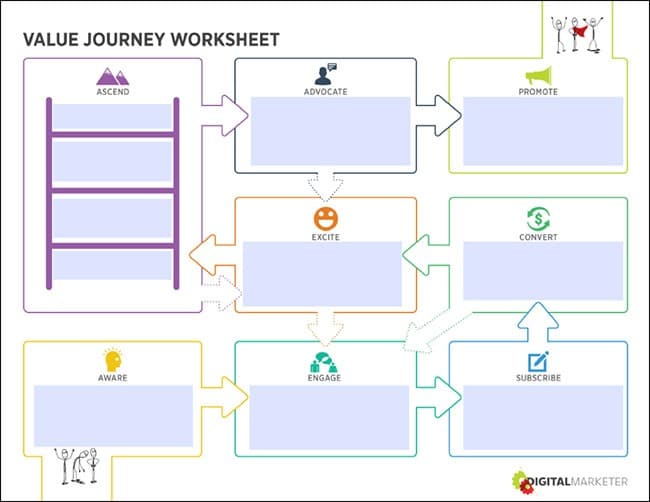
No one finishes this Journey alone.
You will constantly need to be reminding your customer, who you are, why they need you and how you can make their lives better.
If you leave the customers to themselves they will get lost along the way or even worse forget they ever started on a path with your brand.
You need to create a strategy that takes people through all 8 of these steps, giving them a boost when they get stuck and encouraging them every step of the way.
Let’s look at each step of the Customer Journey to see how you might do that.
Why is the Customer Value Journey Important?
The Customer Value Journey is essential for businesses because it helps you understand and align your marketing efforts to guide customers smoothly through each stage. Here’s why it’s crucial:
Builds Trust and Loyalty
By nurturing customers at every stage of their journey, businesses can build trust. When customers feel valued, they are more likely to become loyal and return for repeat purchases.Increases Retention Rates
The CVJ focuses on keeping customers engaged long-term. By continually providing value, businesses can increase customer retention, which is essential for sustaining growth.Drives Revenue
By optimizing the CVJ, businesses can increase conversion rates and revenue. When customers receive the right value at the right time, they are more likely to buy and refer others.Facilitates Personalization
Knowing where a customer is in their journey allows you to personalize their experience, delivering content or offers that are relevant to their current needs.Encourages Word-of-Mouth Marketing
A customer who is satisfied with their experience becomes an advocate, which leads to organic growth. They promote your brand through word-of-mouth or social media, driving new customers.
How to Implement the Customer Value Journey in Your Business
Now that we know the stages and benefits of the Customer Value Journey, let’s discuss how to implement it effectively:
Step 1: Know Your Audience
Understanding who your customers are is the first step. Use market research, surveys, and customer data to create buyer personas. This will help you understand their needs and how they move through the journey.
Step 2: Tailor Content to Each Stage
Create content that matches each stage of the journey. For example:
At the Awareness stage, produce informative blog posts or videos that introduce your brand.
In the Engagement stage, offer free resources like eBooks or webinars.
At the Convert stage, provide discounts or exclusive offers to encourage purchases.
Step 3: Use Marketing Automation
Marketing automation tools allow you to send the right message at the right time. For example, set up email sequences that deliver valuable content at each stage, leading customers to take the next step in the journey.
Step 4: Measure and Optimize
Track customer behaviour at each stage using tools like Google Analytics, email open rates, and engagement metrics. Analyse this data to understand where customers drop off and optimize your efforts to move them to the next stage.
Key Takeaways
The Customer Value Journey helps businesses guide customers from awareness to advocacy, ensuring that each step adds value.
By aligning your marketing efforts with the CVJ, you can increase customer loyalty, retention, and lifetime value.
Understanding the CVJ allows businesses to provide personalized experiences, which can lead to higher revenue and advocacy.
Conclusion
the Customer Value Journey is an essential framework for businesses aiming to build strong, lasting relationships with their customers. By understanding and optimizing each stage from awareness to advocacy, businesses can enhance customer experiences, drive repeat purchases, and foster brand loyalty. Focusing on delivering consistent value at each stage not only improves customer retention but also turns satisfied customers into powerful advocates. Ultimately, by guiding customers through a well-structured journey, businesses can ensure sustainable growth, increase revenue, and create a community of loyal brand promoters.
FAQs
Q1: How long does the Customer Value Journey take?
The timeline for the journey depends on your industry and the customer’s needs. Some customers may move quickly through the stages, while others may take months. The key is to keep delivering value at each stage.
Q2: Can I apply the Customer Value Journey to B2B businesses?
Yes, the CVJ applies to both B2B and B2C businesses. While the specific touchpoints may vary, the core principles of building trust and delivering value remain the same.
Q3: How do I know when a customer is ready for the next stage?
Monitor customer actions such as engagement with emails, website visits, and social media interactions. Automated workflows can help trigger the next step when customers show interest.
Q4: Is the Customer Value Journey different from a sales funnel?
Yes, while both concepts focus on customer conversion, the CVJ is a broader model that emphasizes ongoing customer relationships, while the sales funnel is typically more focused on the conversion process.